Showing posts with label syrah. Show all posts

Sunday, January 16, 2011

Napa Cellars wines: tasty and well-priced

Before the holidays I received four new release samples from Napa Cellars, sent to me by Balzac Communications. I thought these wines were pretty tasty, food-friendly, and really well-priced. For instance, you can currently find the 2009 Napa Valley Chardonnay for $13.99 at Bevmo.

Although Chardonnay is the winery's most popular varietal, Napa Cellars produces wines from seven varieties including Sauvignon Blanc, Chardonnay, Zinfandel, Merlot, Cabernet Sauvignon, Pinot Noir, and Syrah. Grapes are sourced from different areas of the Napa Valley, and lots from diverse climates are often blended together to obtain a consistent quality and balance.

The director of Winemaking is Joe Shirley, a California native raised in Napa Valley. Before Napa Cellars, he worked at Sonoma Cutrer and Trinchero Winery. He's been also involved in research while he was studying enology at UC Davis. He co-authored a paper on grape seed extracts and also a study published in the British Medical Journal The Lancet that showed that chocolate was a more powerful antioxidant than many common foods, such as prunes and blueberries.

Here are the wine samples that we tasted:

• 2009 Napa Cellars Sauvignon Blanc Napa Valley: sourced from vineyards in Yountville and the warmer Chiles Valley, the wine is cool-fermented in 100% stainless steel tanks. To retain the wine's acidity, no secondary fermentation is allowed . The wine exhibits a light yellow color and a fresh nose of grapefruit and citrus. On the palate, it is medium bodied with a rounded mouth feel and lively fruity flavors. Try it with Steamed Mussels in White Wine broth

• 2009 Napa Cellars Chardonnay Napa Valley: sourced from a collection of vineyards located in South Napa, Oakville and Atlas Peak. The fruit from the cool southern part of the valley adds acidity to the blend while the fruit from Oakville adds riper flavors. A quarter of the juice was cold fermented in stainless steel, the rest in small French oak barrels. The wine has a golden color and crisp braeburn apple aromas on the nose. On the palate, it is medium-bodied with peach & cream flavors and notes of vanilla spice on the finish. Try it with Seared Halibut with Haricots Verts, Scallions, and White Wine Sauce

• 2009 Napa Cellars Chardonnay Mount Veeder: sourced exclusively from the estate vineyard atop Mount Veeder. Located west of Napa and Yountville, within the Mayacamas mountain range that separates the Napa and Sonoma valleys, Mount Veeder is the largest AVA within Napa Valley but makes only about 1.3% of total Napa Valley production. It is characterized by a rugged mountain terrain, thin volcanic soils, and labor-intensive viticulture. Wines from the Mount Veeder AVA are typically powerful in structure. The Mount Veeder Chardonnay is produced from grapes that are hand-picked, crushed, pressed, fermented, and left on the lees for six months in 100% French oak barrels. The wine has a golden color with notes of caramel and tropical fruits on the nose. On the palate, it is rich and round with hints of bitter almonds and toasty oak on the finish. It is a more serious than the Napa Valley Chardonnay. Try it with Salmon with Lentils and Mustard-Herb Butter.

• 2007 Napa Cellars Syrah Dyer Vineyard: the Dyer Vineyard is situated on the sunny, northwest hillside of the cool Los Carneros AVA. The vineyard has minimal irrigation. Grapes are cold soaked for 24 hour after crushing and skins are pressed off early to avoid excessive seed tannin extraction. The resulting wine is aged in both French and American oak for 16 months. It is deep in color with a nose of black cherry and pepper. On the palate, it is medium bodied, well balanced with a smooth mouthfeel, leaving flavors of sweet black berries, spices, and notes of oak. Try it with Lamb Chops with Mushroom Wine Sauce

Technorati tags:

Tuesday, November 16, 2010

Tasting the wines of Oregon

At the end of the summer, I had a call from our friend Jean-Frédéric. His brother and his wife — both wine lovers — were coming from France and he was wondering whether we could organize a wine tasting at his place sometime during their visit. We agreed that we should taste some wines from Oregon since I had visited a few Oregon wineries earlier in July. Moreover, his brother and his wife were not very familiar with Oregon wines.

While wine grapes have been grown in Oregon for nearly two centuries, it is only since the 1960s that wine production has become a significant industry in the state. Oregon is now the 4th largest wine producing state in the US, after California (89% of the wine production), New York, and Washington. In 2006, it had more than 370 wineries, up from 70 in 1990, and only 5 in 1970. In 2007, four grape varieties made up more than 80% of the state's wine production: Pinot Noir (55%), Pinot Gris (17%), Chardonnay (5.6%), and Riesling (4.2%). Additionaly, Oregon has recently become a leader in green viticulture and winemaking with more than 140 vineyards and 20 wineries certified by LIVE: Low Input Viticulture & Enology, Inc.


Oregon Wine Regions


Oregon's largest wine producing region is the Willamette Valley, which runs from the Columbia River in Portland to the Calapooya Mountains outside Eugene. The valley has a relatively mild climate with cool wet winters and warm dry summers. The long growing season enjoys warm days and cool nights, allowing the grapes to develop their flavors while still retaining their acidity. The Willamette Valley AVA includes six sub-appellations: Dundee Hills, Eola-Amity Hills, McMinnville, Ribbon Ridge, Yamhill-Carlton District, and Chehalem Mountains.

Here are the wines that we tasted:

• 2009 Evesham Wood Blanc du Puits Sec: founded in 1986, Evesham Wood Vineyard makes Pinot Noir, Pinot Gris, Chardonnay, and Gewurztraminer in the Willamette Valley near the town of Salem. The estate vineyard is located on a low terrace (300-420 ft. elevation) on the eastern side of the Eola-Amity Hills ridge. It was named Le Puits Sec, which means the dry well in French, because there is one in the vineyard. The winery and Le Puits Sec vineyard are certified organic. The wine is a blend of 80% Pinot Gris and 20% Gewurztraminer with minute quantities of Rieslaner and Kerner, two German varieties. My notes: very pale color, a bit shy on the nose, more mineral than fruity. The guests didn't find it very exciting.

• 2008 Chehalem Reserve Dry Riesling Willamette Valley: Chehalem is a small winery established since 1990 in Newberg in the Northern Willamette Valley. It produces wines from Pinot Noir, Pinot Gris, Chardonnay, Riesling, Pinot Blanc, Grüner Veltliner, and Gamay Noir. The Reserve Dry Riesling is produced in very limited quantities and is sourced from the Corral Creek vineyard that surrounds the winery and Stoller Vineyard, a 175-acre vineyard on the southern slopes of the Dundee Hills in Yamhill County. My notes: light color, mineral nose with aromas of honey and tart apple, medium-bodied, crisp on the palate with stone fruit flavors, lively finish, tasty.

• 2009 Evening Land Celebration Les Gamines: Evening Land Vineyards is based in both Oregon and California. It owns two vineyards in California, Occidental Vineyard in the Sonoma Coast and Odyssey Vineyard in the Santa Rita Hills. In Oregon, it leases Seven Springs Vineyard, a 65-acre Pinot Noir vineyard in the Eola-Amity Hills appellation. The Oregon wines are made by winemaker Isabelle Meunier with the help of consulting winemaker Dominique Lafon of Domaine des Comtes-Lafon in Burgundy. Inspired by the Bourgogne Passe-Tout-Grains, Les Gamines is made from a small block of Seven Springs Vineyard old vine Gamay Noir (60%) and Pinot Noir (40%). My notes: medium purple-pink color, bright strawberry nose, fresh aromas of plums and berries on the palate, quite pleasant.

• 2007 Argyle Pinot Noir Willamette Valley: owned by Petaluma Winery of Australia, Argyle Winery was founded in 1987 by Australian vintner Brian Croser and winemaker Rolin Soles. Housed in a former hazelnut processing plant in Dundee, the winery is well known for its still and methode champenoise sparkling wines. The Willamette Valley Pinot Noir is sourced from the Knudsen Vineyard in the heart of the Red Hills of Dundee, Argyle's primary vineyard source since 1987. My notes: medium color, fresh fruity nose, soft texture, mid palate on the light side, easygoing and not really popular among the guests.

• 2007 Ponzi Pinot Noir Willamette Valley: founded in 1970, Ponzi Vineyards is one of Oregon's oldest wineries. It is located just 30 minutes from downtown Portland in the city of Beaverton. The Willamette Valley Pinot Noir is a blend of several 100% Certified Sustainable vineyards. The fruit is hand sorted and destemmed and then fermented in small lots with five days of cold soak to increase aroma and color. The wine is aged in French oak barrels (30% new) for 11 months. My notes: medium garnet color, attractive nose of red and black cherry, medium-bodied, well balanced acidity, quite tasty, more complex than the Argyle.

• 2008 Shea Wine Cellars Pinot Noir Estate Willamette Valley: Shea Wine Cellars was founded by grape growers Dick and Deirdre Shea in 1996. The winery produces wines from the Shea Vineyard, a 200-acre vineyard property located in the Yamhill-Carlton District that also supplies fruit to several of Oregon's and California's premium wineries. Roughly 25% of the vineyard production is used by Shea Wine Cellars for its releases. My notes: dark color, sweet nose of blackberry and spicy cherry, full-bodied, more power than finesse, somewhat too bold for a Pinot Noir.

• 2006 Francis Tannahill Syrah Mason Dixon: Sam Tannahill was winemaker at Archery Summit before founding Francis Tannahill Wine Co in 2001 with his wife Cheryl Francis, who was co-winemaker at Chehalem. They are also co-owners of A to Z Wineworks. The Mason Dixon Syrah is a blend of several vineyards including Deux Vert, a small vineyard planted on a low elevation southern slope outside the town of Yamhill and the only producing Syrah vineyard in the northern Willamette Valley. My notes: dark color, pepper, plum and violet aromas on the nose, dry, complex, well-balanced palate with some good acidity, spicy finish without being very fruity, a northern Rhone style of Syrah and one of the best wines of the evening.

Related posts:
•  Touring the wineries in Oregon's Willamette Valley
•  Our Oregon trip: wine tasting at the Ponzi Wine Bar
•  Our Oregon trip: The Beaux Frères Vineyard
•  Oregon Trip: Dinner at the Painted Lady Restaurant
•  Oregon Trip: J.K. Carriere Wines
•  Last but not least from our Oregon trip: Brick House Vineyards and The Eyrie Vineyards

Technorati tags:

Wednesday, May 26, 2010

Tour of Savannah-Chanelle Vineyards

The other day, we were invited by our friend and real estate agent Sophie Ravel to a wine tasting and lunch event at Savannah-Chanelle Vineyards.

Savannah-Chanelle Vineyards is a small winery located in the scenic Santa Cruz Mountains above the town of Saratoga. It was founded in 1892 by a French immigrant named Pierre Pourroy but Prohibition quickly forced the Pourroy family to shut down production. Winemaker Daniel Gehrs bought the neglected winery in 1976 and was able to rescue the old Zinfandel and Cabernet Franc vines that were still growing on the estate. Eventually, Michael and Kellie Ballard purchased the property in 1996, naming it after their two daughters Savannah and Chanel. Two years later, the Chanel fashion house sued the Ballards forcing them to change the winery name to Savannah-Chanelle Vineyards.

The estate has 58 acres planted with Pinot Noir, Cabernet Franc, Zinfandel, and Chardonnay. The Zinfandel plantings date back to 1910, and the Cabernet Franc plantings —California's oldest— date back to 1920. We didn't have the opportunity to taste the old vine Estate Zinfandel nor the Cabernet Franc but we were served an unoaked 2009 Chardonnay Monterey County that I particularly liked, It was refreshingly crisp with attractive aromas of grapefruit and lemon . I also enjoyed the tasty and peppery 2007 Syrah Coastview Vineyard, from a vineyard located at 2600 ft on a mountain top overlooking Monterey Bay.

It was a warm and sunny day and we had a nice lunch in the lawn and garden area in front of Pierre Pourroy's Mediterranean-style chateau and surrounded by tall redwood trees and hillside vineyards. There was also a raffle and I did win one of the three prizes, a set of 2 Riedel Burgundy glasses! But that's the subject of a future post.


The old redwood winery built in 1922 that now houses the tasting room


Inside the tasting room


Old Zinfandel plantings


View from the garden of a small hillside Pinot Noir vineyard


Technorati tags:

Thursday, October 01, 2009

Syrah Blind Tasting

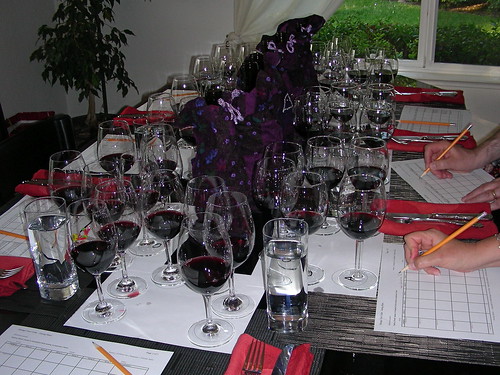
Syrah was the theme of our last blind tasting meeting. The guests brought 6 different wines from various regions, including California, Oregon, Washington State, and the Rhône Valley. As usual, the wines were served blind and in a random order, but oddly this time, we unanimously enjoyed the first three, and found that the last three were fairly flawed.


Our Wine Tasting Setup


The wines we tasted:

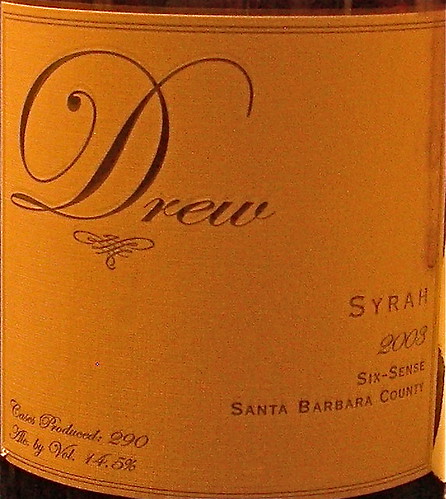
• 2003 Drew Syrah Six Sense Santa Barbara County: Drew Wines focuses solely on vineyard and appellation specific Pinot Noir and Syrah. The Six Sense Syrah is a blend of 100% Syrah from six different vineyards located within Santa Barbara County, and from six different grape clones. The different components of the wine were barreled separately and aged for eleven months, in a combination of French and American oak barrels, 1/3 new, 2/3 neutral. Our notes: nose of sweet cherry nectar, ripe and smooth on the palate, spices and herbs on the finish. Well balanced, food friendly. Finished in second position.

• 2005 Ridge Syrah Lytton West: Ridge's Lytton West Vineyard is located in the hills separating the Dry Creek and Alexander Valleys in Sonoma County. The wine is 94% Syrah cofermented with 6% Viognier. According to the winery's website, “Viognier has a beautiful pungency of apricot, peach, and white flower which helps lift the total aroma of syrah which tends to be dark and gamey.” Our notes: nose of cooked fruit with notes of cinnamon and blueberry. Rich, smooth on the palate with flavors of creamy custard. Lengthy finish. Finished in first position.

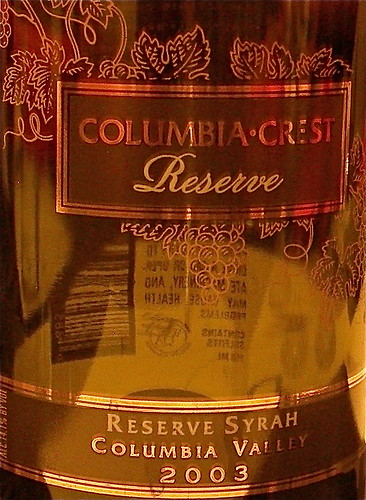
• 2003 Columbia Crest Reserve Syrah Columbia Valley: founded over 20 years ago, Columbia Crest is one of Washington State's main wine producers. The 2003 Reserve Syrah was co-fermented with 2% of whole berry Viognier whith fruits coming from two vineyard sites—one for Syrah and one for Viognier—in the Horse Heaven Hills appellation. Our notes: fruit forward nose with notes of green pepper and cocoa. On the palate, medium bodied, high in alcohol with a spicy, earthy finish. Finished in third position.

• 2006 Cornas Granit 30 Domaine Vincent Paris: Vincent Paris, co-president of the Cornas appellation, owns 6 hectares of vineyards located along the southeast facing Cornas slope as well as in the nearby St. Joseph appellation. He makes two Cornas designations, the Granit 30 and Granit 60, that differ in terms of soil, age of the vines, and location in the slope. The Granit 30 comes from younger vines at a lower grade slope and is made in a more “consumer friendly” style. Our notes: barnyard aromas on the nose, tannic, acidic on the palate, not consumer friendly. Finished last.

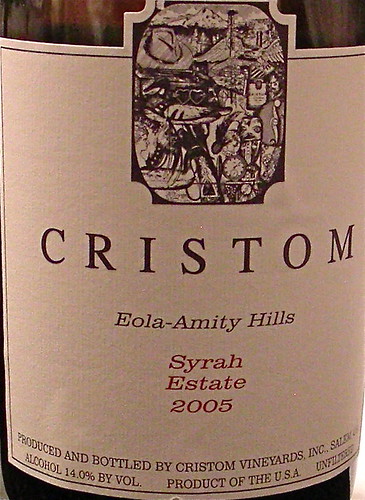
• 2005 Cristom Estate Syrah: Cristom Vineyards cultivates eight distinct vineyards in the Eola Hills area of Oregon's Willamette Valley. Plantings include Pinot Noir, Chardonnay, Pinot Gris, Viognier and Syrah. The vineyards are dry farmed with low yield. Our notes: notes of chemicals on the nose, tight, tannic, acidic on the palate. Finished in fifth position.

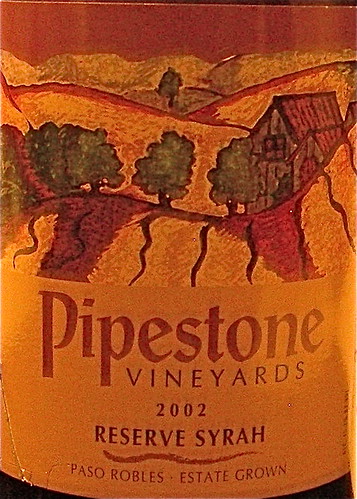
• 2002 Pipestone Reserve Syrah Paso Robles: Pipestone Vineyards is a small family winery located in the Paso Robles appellation. It is dedicated to sustainable farming and producing handmade Estate Grown Rhône-style wines from Syrah, Grenache, Mourvèdre, and Viognier and a dry-farmed Zinfandel. The Estate Syrah is grown on a south-facing hillside in the estate vineyard. Hand-harvested, it was aged in French and American oak barrels for 24 months. Our notes: dusty nose of caramel and cocoa. On the palate, high in alcohol, dry, tannic, not so well balanced but drinkable. Finished fourth.

Previous blind wine tastings:
•  Blind Tasting of Cabernet Blends from Washington State
•  Blind Tasting of Pinot Noir from Los Carneros and Anderson Valley
•  Blind Tasting of Grenache-based Wines

Technorati tags:

Thursday, August 06, 2009

Tasting Syrah in Crozes-Hermitage

This year, a family reunion took us to the northern Rhône Valley, not far from the village of Mercurol considered to be one of the best locations for the Crozes-Hermitage appellation. Between long family meals and other activities, we took the time to visit two wineries there.


The village of Mercurol


The first one was the Domaine des Entrefaux, a family-owned estate farming 21 hectares of Syrah and 4 hectares of Marsanne and Roussanne on the hills around Mercurol. Grapes are hand-harvested and fully destemmed before being aged in vats or oak barrels.


Domaine des Entrefaux


The wines we tasted:

• 2007 Crozes-Hermitage Blanc Domaine des Entrefaux Les Pends: blend of 70% Marsanne, 30% Roussanne from Les Pends, a slopy vineyard in Mercurol. Aromatic nose of stone fruit, oily mouthfeel on the palate, richly balanced.

• 2007 Crozes-Hermitage Domaine des Entrefaux Les Champs Fourné: a blend of estate young vines and from a vineyard called Champs Fourné. Aged in stainless steel vats. Fig and dried fruits aromas on the nose, medium-bodied, bright acidity on the palate.

• 2007 Crozes-Hermitage Domaine des Entrefaux : older vines from the estate. Soil made of rocks, pebble stones and clay. Partly aged in oak barrels. Sweet prunes aromas on the nose. More tannins, spices and licorice on the finish.

• 2006 Crozes-Hermitage Domaine des Entrefaux Les Machonnières: 25 to 50 year old vines from a hilly vineyard in Mercurol. Aged in oak barrels, 5% new. Blackberry jam, plums and prunes on the nose. Toasty, yeasty, tannic on the palate, needs aging.


Wine from the Domaine des Entrefaux


The Domaine des Remizières is not far away on the main road leading to Tain-l'Hermitage. The winery is family-owned since three generations and had originally approximately 4 hectares of vines. Part of the production used to be made at the local cooperative, but since 1973, all the wine is produced at the domain, which has now 30 hectares under vines.

The wines we tasted:

• 2008 Crozes-Hermitage Blanc Domaine des Remizières Cuvée Christophe: blend of 85% Marsanne, 15% Roussanne growing on clayey-limestone hill-side, south-facing soils. Aged in oak barrels. Nose needed to open up. Dry and fat on the palate, complex finish.

• 2007 Crozes-Hermitage Domaine des Remizières Cuvée Particulière: clayey-limestone hill-side soils. Aged in oak barrels, a few new. Pepper and red berry on the nose, full bodied on the palate, good acidity .

• 2007 Crozes-Hermitage Domaine des Remizières Cuvée Christophe: 65 year old vines on average. Aged in oak barrel, 70% new. Spicy, more tannic, needs time.

• 2007 Saint-Joseph Domaine des Remizières: granitic hill-side, south-facing soils. Floral, spicy nose. Round and silky on the palate, tannic finish.


Wine from the Domaine des Remizières


Technorati tags:

Tuesday, April 07, 2009

Tasting the wines of the Rhône Valley

How familiar are you with the wines of the Rhône Valley? Although the Rhone Valley is among France's best wine regions, we are not always aware of its multi-faceted viticulture and wine traditions.

The Rhône Valley consists of two fairly distinct viticultural regions. The Northern Rhône is characterised by a continental climate with cold winters and warm summers. It produces red wines from the native grape Syrah, which is sometimes blended with white grapes, and white wines from Viognier, Marsanne, and Roussanne. The Southern Rhône has a Mediterranean climate with mild winters and hot and dry summers. The region produces red, white and rosé wines, which are generally blends of several grapes including Syrah, the drought-resistant Spanish grapes Grenache, Mourvèdre, and Carignan, as well as Cinsault, Viognier, Marsanne, Roussanne, and Clairette.

For this tasting, we had a selection of seven white and red wines from Northern and Southern Rhône. Here are the wines that we tasted:

• 2006 Crozes-Hermitage Blanc Albert Belle Les Terres Blanches: a former member of the local co-op, Domaine Albert Belle has developed a solid reputation for producing top quality wines. The estate has now 19 hectares over 4 communes and two appellations, Crozes-Hermitage and Hermitage. This Crozes-Hermitage Blanc is a blend of Marsanne and Roussanne. My notes: light golden color, shy nose, fresh and light-bodied on the palate with an oily mouthfeel. Butterscotch aftertaste. Pretty nice.

• 2007 Le Secret Ivre Domaine Pierre Gaillard: Pierre Gaillard started working in the wine business at a very young age and is now considered one of the Northern Rhone's best producers. Le Secret Ivre, which means The Drunken Secret, is 60% Viognier and 40% Roussanne. My notes: golden color, floral aromas on the nose, somewhat unbalanced on the palate. Not a crowd pleaser.

• 2005 Saint-Joseph Domaine Coursodon Silice: Domaine Pierre Coursodon is a 12 hectare estate in the Saint-Joseph appellation — the second largest appellation in the Northern Rhône after Crozes-Hermitage — growing Syrah and Marsanne grapes. Harvests are manual and vinification is traditional. My notes: 100% Syrah. Deep color, expressive fruity nose, fresh and supple on the palate, excellent with charcuterie.

• 2005 Cornas Eric et Joël Durand Empreintes: Cornas, a Celtic word that means burnt earth, is one of the smallest appellations in the Northern Rhône. The production is only red wine from the Syrah grape. Domaine Eric et Joël Durand is located in the southern part of the Saint-Joseph appellation and is also making wine from the neighboring Cornas. My notes: 100% Syrah. Dark color, peppery and blackberry aromas on the nose, full-bodied, great texture on the palate, multi-dimensional. Very classy, a big favorite of the evening.

• 2006 Lirac Domaine de la Mordorée Cuvée La Dame Rousse: Lirac is located along the right bank of the Rhône river, opposite Chateauneuf-du-Pape, in the southern Rhône Valley. Domaine de la Mordorée is named after the poetic local nickname used for the woodcock that flies over the region during its migrations. The domain produces wines from the Châteauneuf du Pape, Lirac, and Tavel appellations. The Dame Rousse cuvée is half Syrah, half Grenache from 40-year-old vines. My notes: deep color, sweet fruit on the nose, but after the Cornas, seemed aggressive in the mid-palate. More detractors than amateurs.

• 2005 Châteauneuf-du-Pape Domaine Chante Cigale: Châteauneuf-du-Pape is the most renowned appellation of the Southern Rhône Valley. Its terroir is characterized by a soil covered with galets or pebbles. The pebbles retain heat during the day and release it at night, which accelerates the ripening of the grapes. It also retain moisture in the soil during the dry summer months. Thirteen grape varieties are allowed to be used in the Châteauneuf-du-Pape appellation. The Châteauneuf-du-Pape of Domaine Chante Cigale is a blend of 65% Grenache, 20% Syrah, 10% Mourvèdre and 5% Cincault. The average age of the vines is 50 years. The vinification is traditional and ageing is done with a combination of foudres, new barrels, and cement tanks. My notes: deep color, aromatic nose, rich and full-bodied on the palate, tasty finish, another favorite of the evening.

• 2005 Gigondas Domaine Raspail-Ay Réserve: Gigondas is one of the best appellations in the Southern Rhône. The production is mostly Red with a small amount of Rosé. The place has been renowned for the quality of its wines since Roman times when it was named Jocunditas, which means joy or pleasantness in Latin. Founded in 1854, Domaine Raspail-Ay is a respected 18 hectare property around the village of Gigondas. My notes: a blend of Grenache, Syrah and Mourvèdre. Deep color, ripe berries on the nose, full-bodied, bigger than the Châteauneuf, slightly more rustic but good.


For our next meeting, we'll be pairing wine and cheese, so don't miss it!

Previous wine club tastings:
•  Pinot Noir Tasting
•  Second "Guess The Wine" tasting party
•  Wine and Cheese pairing

Technorati tags:

Thursday, February 05, 2009

The silver spoon trick: it actually works!

The other day, I opened a bottle of 2004 Tablas Creek Syrah for dinner, a young wine with lots of fruits and a rather bold attack. So I grabbed a silver spoon from the kitchen drawer and dipped it into the glass. I left the spoon in the wine for a few minutes and then brought the glass to my husband. Without telling him about my little experiment, I asked him to compare the wine (that I called wine A) with the original Syrah (wine B).


His reaction: “Hum, I do like wine A. It's smooth, well-balanced, and full-flavored. But wine B is too strong for me. Well, I don't really like wine B. Is there more of wine A?”

Q.E.D.

Wednesday, July 09, 2008

WBW #47: A Spicerack Sonoma Syrah Brought To You By The Letter S

This is the July edition of Wine Blogging Wednesday and it has been brought to us by Erin and Michelle of the Grape Juice blog. And this time, we've been asked to be a kid again, to regress a little bit into our childhood, and think outside the box! So today's wine has been brought to you by the letter S.

No, I am not Silly and here is my S wine: the 2006 Spicerack Punchdown Syrah Sonoma Coast. Spicerack is a project from Marin winemakers Jonathan and Susan Pey of Scenic Root Winegrowers. The wine comes from two low-yielding, Sustainable farmed, cool climate vineyards in the Sonoma Coast appellation. The name reflects the many times the cap was punched down during fermentation. After that, only neutral oak barrels were used for aging.

The wine has a Serious dark color and a Spicy, peppery nose of Sweet fruit. With a reasonable level of alcohol (13.2%), the palate is Super Smooth with a Somewhat Solid Structure. Smoky, I wouldn't say, rather Savory, perfect anyway with Some Spiced Lamb Chops With Cucumber-Mint Sauce.

Previous WBW posts:
•  WBW #45: Old World Riesling, awesome!
•  WBW #44: can Chinon wines age?
•  WBW #43: 2004 Chinon Domaine de la Noblaie Les Chiens-Chiens, a comfort wine

Technorati tags::

Tuesday, June 24, 2008

From the Miner Family: 2005 Syrah La Diligence Stage Coach Vineyard

Miner Family Vineyards is a small Napa Valley family-owned winery, well known for producing a portfolio of high-end wines. The winery has recently introduced a new label called La Diligence, actually a joint project between Miner and Domaine François Villard. François Villard is a young vintner from the Northern Rhône Valley and renowned for producing exceptional Viogniers and Syrahs from the Condrieu and Côte-Rôtie appellations. The name of the wine refers to this Franco-Californian joint venture: Diligence means Stagecoach in French

With over 500 acres planted, Stagecoach Vineyard is one of the largest vineyards in Napa Valley. The land stretches between the Oakville and the Atlas Peak appellations, from an elevation of 900' climbing to over 1700'. The location is unique thanks to the cool morning fog that rolls off the hills during the summer, and a rocky, volcanic, well-drained soil. The vineyard is planted primarily to Cabernet Sauvignon, with Syrah and Malbec on south and west facing slopes, and small plantings of Viognier and Marsanne found in rocky, thin soiled areas.

The 2005 Miner Family Syrah La Diligence Stage Coach Vineyard had a dark, purple color and aromas of sweet black fruit on the nose. The palate was full-bodied, rich, woody, with a long cocoa/moka finish. The wine was remarkably tasty, although a little too young. We served it with a Cocoa-Chili-Rubbed Chicken dish, which was actually a great combination.

Technorati tags: