Showing posts with label argentina. Show all posts

Friday, October 29, 2010

Vino Argentino: learning more about the wines and food of Argentina

A few weeks ago, Michael Lamp from Hunter Public Relations sent me a couple of wine samples from the Alamos brand. There was also a copy of Laura Catena's new book, Vino Argentino that she describes as an insider guide to the wines and wine regions of Argentina.

Laura Catena's life is absolutely fascinating. She is simultaneously a practicing emergency room physician, a winery owner, an active ambassador of Argentine Wine, and a book writer. She is also the daughter of Nicolás Catena, the pioneer of Argentina's high-altitude viticulture and the first wine producer to plant a Malbec vineyard at almost 5,000 feet (1,524 m) elevation in the high plains of Mendoza.

The Mendoza province is Argentina's main wine region. It is a high desert that receives an average annual rainfall of less than 8 inches (20 cm). The climate is continental with very cold nights and intense sunlight during the day thanks to the elevation. The soils are very poor in organic material and filled with alluvial rocks and gravels, which means excellent drainage. Grapevines growing in this environment suffer and have low yields. To protect their seeds from the sun, they build thick grape skins that are rich in tannins and polyphenols, therefore producing wines that are concentrated and flavorful.

The Alamos brand was introduced in 1993 by the Catena family as a second label to the higher priced Catena wines. The name Alamos means poplar in Spanish and is derived from the poplar trees lining the vineyards to protect them from the strong dry winds coming from the Andes.
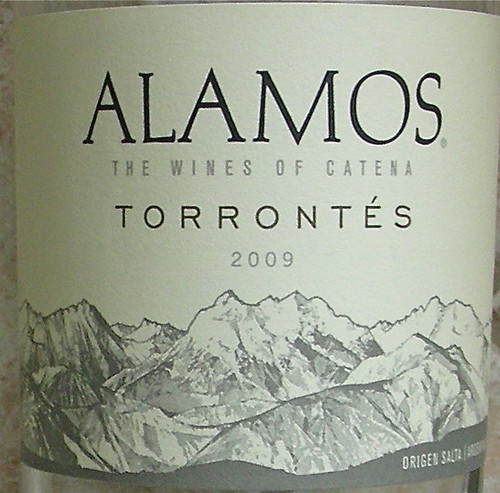
We tasted our first wine sample, the 2009 Alamos Torrontés, with appetizers. A crossing of Criolla Chica (a local cousin of the Mission grape) and Muscat of Alexandria, Torrontés is Argentina's signature white variety. The grape, which thrives in cold and dry conditions, produces the best wines in the Salta Province in the north west of the country, a region of high altitude and low humidity, with dramatic diurnal temperature variation.

The Alamos Torrontés is sourced from vineyards located near the city of Cafayate, in the Salta province. It is cold fermented and aged in stainless steel tanks. The wine showed a light golden color and an aromatic nose of peach, apricot, and white flower blossom. On the palate, it was crisp and fresh with notes of honey and orange peel on the finish.
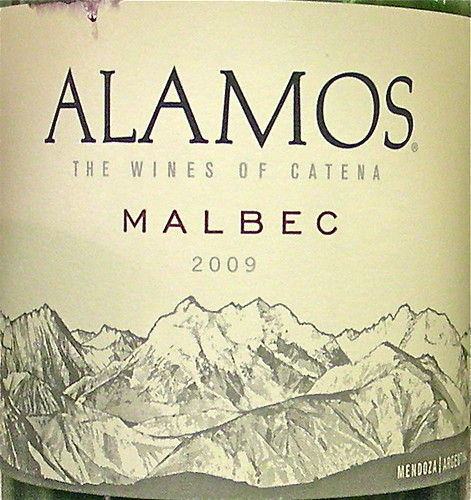
With our dinner, we opened the other Alamos bottle, a 2009 Alamos Malbec. Malbec is the signature wine of the Mendoza region. Originally from France, it is one of the six grapes allowed in the blend of red Bordeaux wine. It is also the primary grape used in the Cahors appellation in the South-West of France. But then in the 1860s, a French agricultural engineer called Michel Pouget brought the grape to Argentina. Malbec being a thin-skinned grape that needs more sun and heat than either Cabernet Sauvignon or Merlot to mature, it quickly thrived in Argentina's high-altitude vineyards and is now widely planted in the country.

The Alamos Malbec is sourced from high-altitude vineyards in the Mendoza wine region. It is aged 9 months in oak barrels, 50% French, 50% American, 25% new. The wine had a dark purple color and aromas of black cherries and blackberries on the nose. On the palate, it was full-bodied with a good balance of acidity and tannins and notes of pepper and pomegranate on the finish.

For dinner, I made a Carbonada, using a recipe that I found in Laura Catena's book. The stew was heartwarming with some sweet and fruity flavors that went perfectly well with the Malbec.

There are several other recipes in the book that look as delicious. And many other things too that make you wish you could visit the country.
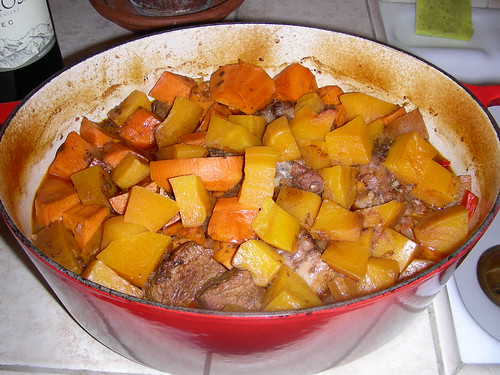

Carbonada


Technorati tags:

Friday, December 07, 2007

Tasting the wines of South America

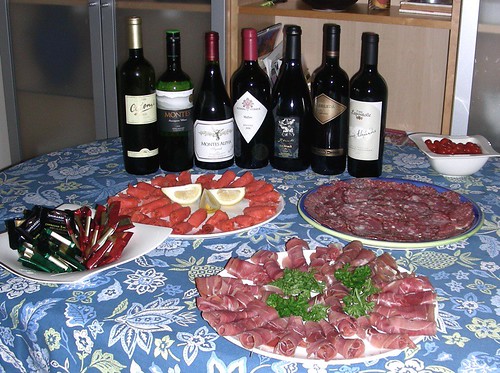
The wines from South America was the theme of our last wine club tasting event. The selection included three wines from Argentina and four from Chile. The overall impression of the tasting was that many of the wines were big and some rather high in alcohol. These wines were also highly rated by wine critics —six out of seven were rated 90 points and above — showing that these South American wineries had been successfully positioning themselves for the American/European market.

Argentina
Although Argentina is one of the world's top five largest wine producing countries, quality-focused winemaking in Argentina has a young history. Not so long ago, most of Argentina's production was aimed at the local market. However, economic stability over the past decade has encouraged substantial investment — especially from foreign countries — and quality has drastically improved.

In Argentina, the winemaking region spreads along over 2,400 km at the foothills of the Andes. The region is dry and arid, a semi-desert with a wide thermal amplitude between day and night. Irrigation is essential and comes from the melting snow of the Andes. Here, altitude is one of the key factors to growing quality wine grapes. Vineyards are planted at between 2,500 and 5,000 feet to exploit cooler temperatures.

Chile
According to Chilean winemakers, “Chile is a paradise to grow grapes”. Wine has been made in Chile for centuries thanks to a unique combination of climatic and geographical conditions. Chile's wine regions are located in the broad valleys that lie against the Andes Mountains. In these valleys, the climate is generally hot and dry, although always balanced by cooling influences from the cold Pacific Ocean that is rarely more than 80km away.

Thanks to the Andes Mountains, a natural barrier against the invasion of diseases, Chile has never been attacked by the root louse Phylloxera. Therefore, vines can safely grow on their own roots. They can be planted by simply sticking cuttings into the ground without the burden and expense of grafting them on to resistant rootstock.


The wines we tasted:

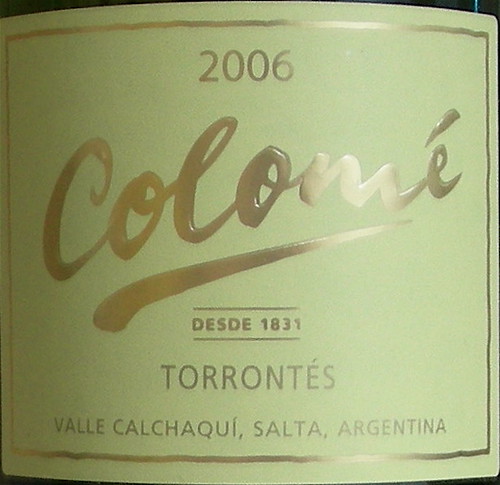
• 2006 Colomé Torrontés Salsa. Torrontés is Argentina's number one white variety although it is practically unknown in other parts of the world. It produces fragrant and fruity wines with crisp acidity and plenty of body. Bodega Colomé is situated at 7500 feet elevation in the Salta wine region near the base of the Andes and is actually the highest altitude winery in the world. Their Torrontès comes from 80-year-old vines farmed using biodynamic principles. My notes: extremely aromatic, a hint of sweetness, medium-bodied, reminded us of a Viognier.

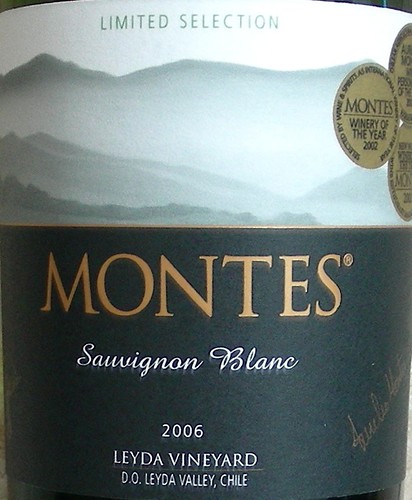
• 2006 Montes Sauvignon Blanc Leyda Vineyard: Viña Montes is a state-of-the-art winery from Chile that was founded in the late 1980s with the mission “to produce the best wines and continue opening markets and bringing the Chilean flag to all the world.”. Every bottle of wine is embossed with a seal that reads “From Chile with pride.” Today, over 90% of the wines from Montes are exported to over 70 different countries throughout the world. This Sauvignon Blanc comes from Leyda Vineyard located north of the Colchagua Valley and slightly cooler thanks due to its proximity to the Pacific Ocean. My notes: very fruity nose, aromas of citrus, crisp, pleasant.

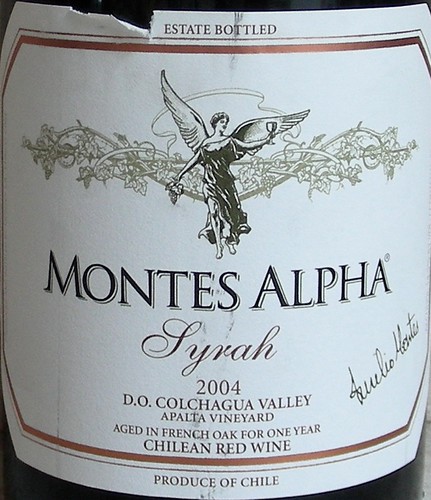
• 2004 Montes Alpha Syrah Apalta Vineyard: The Apalta Vineyard is located in Chile's Colchagua Valley at fairly high elevation, some 40 miles from the coast. The weather is characterized by warm and sunny days and very cool evenings. My notes: purple black color, ripe fruit aromas on the nose, thick, woody, and alcoholic on the palate. Overall, was found bold and for some, unbalanced.

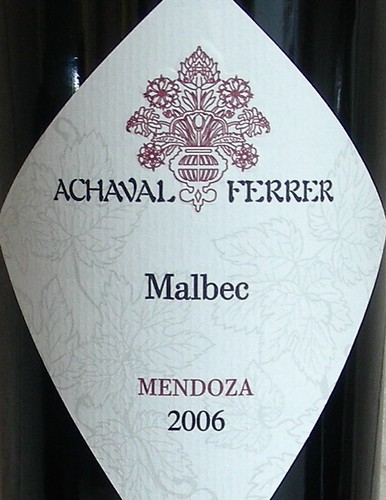
• 2006 Achaval Ferrer Malbec Mendoza: Achaval Ferrer is an Argentinean winery located in the Province of Mendoza, the country's largest wine region. The wine is 100% Malbec, Argentina's great red grape. Malbec is also one of the traditional Bordeaux varietals and the dominant red varietal in the Cahors appellation. Argentinian Malbecs are sometimes considered the best in the world. My notes: dark purple color, black fruit and pepper on the nose, some tannins and acidity on the palate. Nice yet not overly complex.

• 2003 Tikal Patriota: from the Mendoza wine region in Argentina, this is a blend of Bonarda and Malbec. Unrelated to the Piedmont grape Bonarda Piemontese, Argentina's Bonarda may be the same grape as Charbono a variety of French origin and imported from California. Bonarda is today the second most widely planted grape variety in Argentina after Malbec. My notes: dark color, rich fruity flavors, well-balanced with some complexity. One of my favorite wines of the evening.

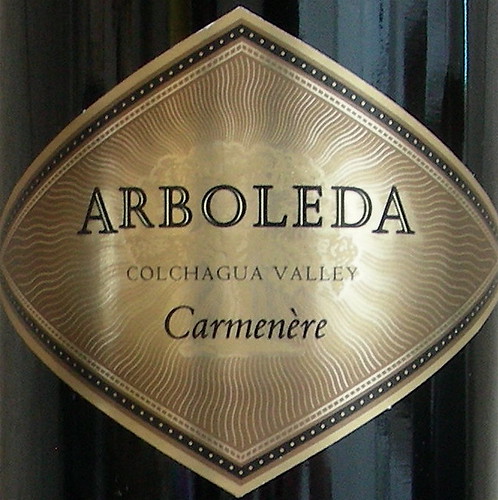
• 2005 Arboleda Carmenère: Also a traditional Bordeaux varietal, Carmenère is currently the rising star of the Chilean wine industry. Because of its susceptibility to mildew and pests, it is rarely used in Bordeaux anymore and as of today, Chile produces the vast majority of Carmenère wines with more than 4,000 hectares cultivated. Arboleda, which in Spanish means grove of trees, is a company founded in 1999 by Robert Mondavi and Eduardo Chadwick of Viña Errázuriz. My notes: deep color, aromas of black fruit and bittersweet dark cocoa, smoky, round mouthfeel, dusty finish. Another favorite of mine.

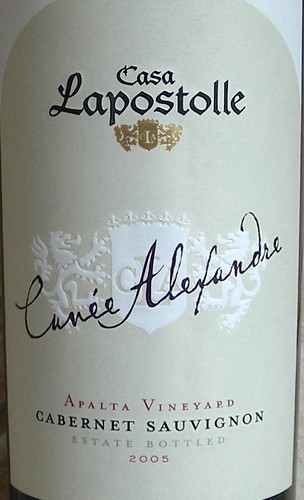
• 2005 Casa Lapostolle Cabernet Sauvignon Cuvée Alexandre: The Marnier-Lapostolle family, creator of the Grand Marnier liqueur, founded Casa Lapostolle in 1994, purchasing an old wine estate in Chile's Colchagua Valley. The cuvée Alexandre is named after the owner's great-grandfather, Alexandre Marnier, who created Grand Marnier in 1880. It is a blend of 85% Cabernet Sauvignon, 15% Merlot coming from non irrigated 60 year old vines. My notes: deep red color, black berries on the nose, firm on the palate with tannins. Seems too young to be drunk now for my taste, should age a little bit longer.

Our next tasting event is our traditional end of the year Champagne tasting. We'll have a great selection of wines, mostly from small Champagne growers so don't miss it!

Previous wine club tastings:
•  Tasting Summer Wines from around the Mediterranean Sea
•  Guess the wine tasting
•  Tasting the wines of Australia and New Zealand

Technorati tags: